The full-scale war and continuous attacks on the Ukrainian power grid are forcing communities across Ukraine to rapidly find solutions to protect critical infrastructure. Decentralization is becoming a reliable response to these challenges – building a distributed network that cannot be destroyed with just a few strikes. Supporting such solutions is a core focus of RePower Ukraine’s work, helping communities strengthen their energy resilience and implement modern tools for the energy transition.
Together with Siward Zomer, Chair of the Board at Energie Samen and Board Member at REScoop.eu, our team embarked on an extensive field visit, traveling from the west to the center of Ukraine. Notably, this was Siward’s first trip to our country since the beginning of the full-scale invasion. The itinerary covered the Lviv region (Lviv, Drohobych, Truskavets) and the Kyiv region, specifically the capital and Brovary.
The purpose of the visit was to see and evaluate the performance of already implemented projects firsthand, as well as to lay the groundwork for introducing the European model of energy communities. For Siward, it was crucial to understand the very nature of Ukrainian resilience – from the unity of society as a whole to the autonomy of local energy solutions.
The Lviv region experience and first impressions from European partners
Siward’s visit began in Lviv, where the outward tranquility of a European city quickly gave way to the harsh reality of war. In his first personal blog post, he shared this profound emotional encounter:
“I’ve been in Lviv for two days now and have already walked around the city a lot. It’s a beautiful city… Sunny. Bustling with people. Nothing would betray the fact that there is a war going on here. Until I stroll through a park and suddenly see a board with a whole list of names and photos of missing boys. Not an 80-year-old monument, but something happening here and now. It’s a sudden slap in the face while you’re walking carelessly in the sun.”
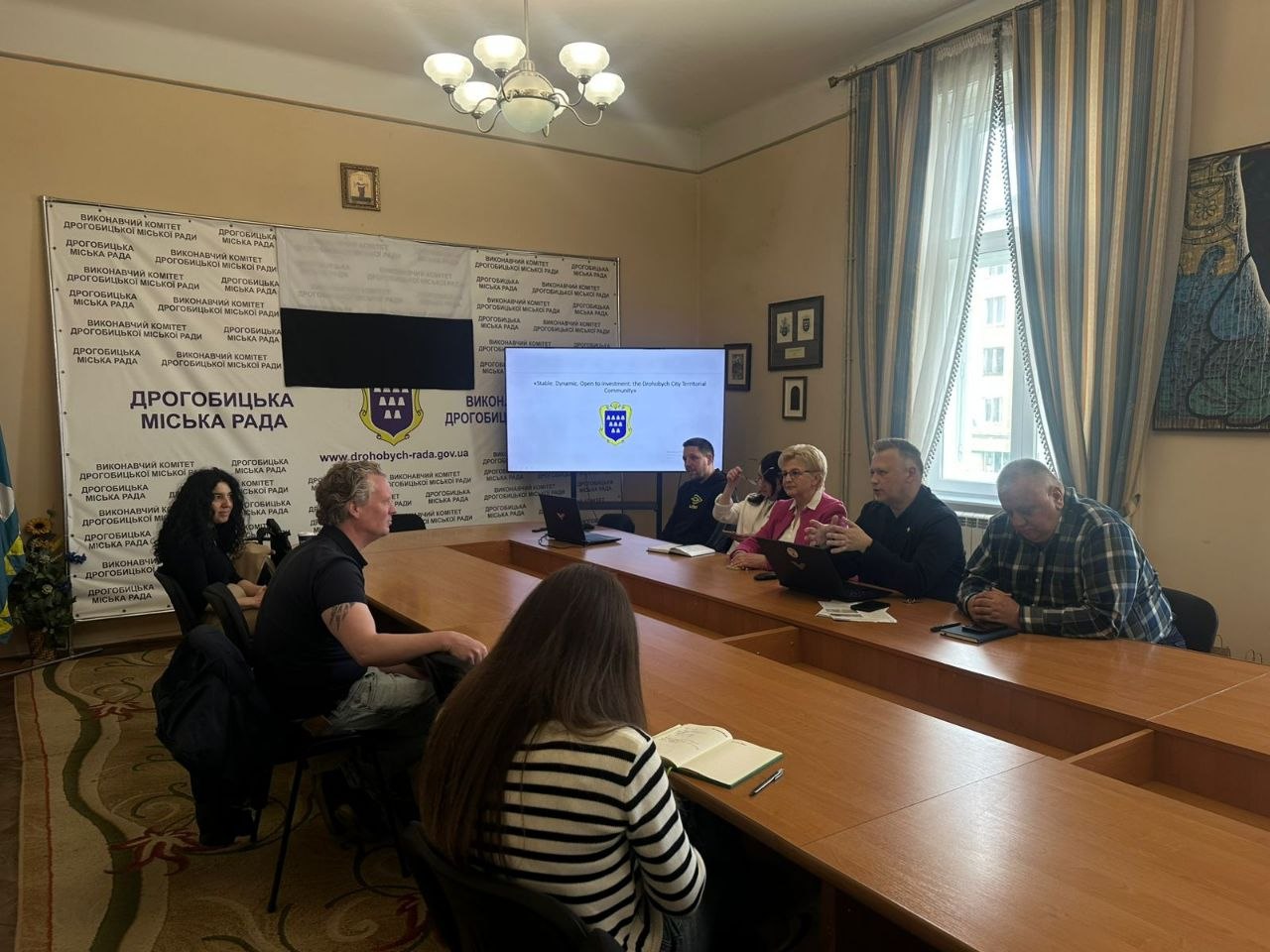
In Drohobych, the team held a strategic meeting with the First Deputy Mayor. Despite the initial skepticism of the officials, Siward successfully conveyed the benefits of an alternative “third way” — where the community itself becomes the owner of energy facilities:
“Our goal is for the residents to become owners and investors themselves. The owner of a wind farm keeps more for themselves than they give back to the community as a buyout. By becoming owners ourselves, we guarantee that all the profit generated remains within the community.”
The meeting concluded with an agreement to establish the first local energy cooperative. Discussing the financing of future projects, Siward assured that he would do everything in his power to convince European partners at REScoop.eu to support Ukrainian communities.
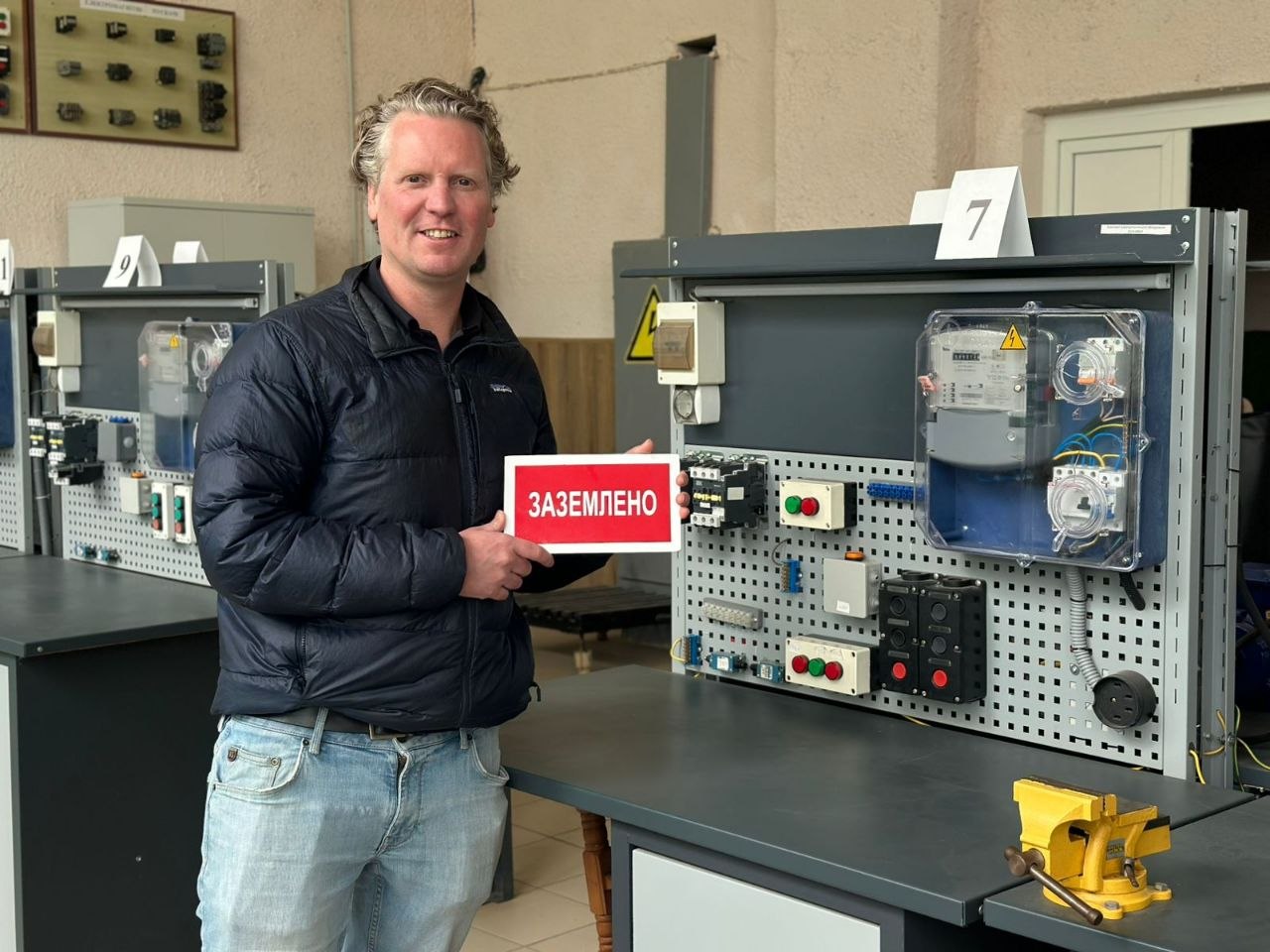
The team also visited a college in Boryslav that trains future renewable energy specialists and toured a solar power plant at a water supply facility in Truskavets – a vivid example of protecting critical infrastructure.
Next stop – the Kyiv region
The second part of the visit took place in the Kyiv region, where Siward was also accompanied by the RePower Ukraine team. Traveling through the capital, the Dutch guest captured a unique image of Ukrainian cities:
“All around us, new apartment buildings are being erected, lined with glass windows. Construction just goes on. Modern buildings stand between old Soviet blocks and industry as a kind of architectural resistance to the past.”
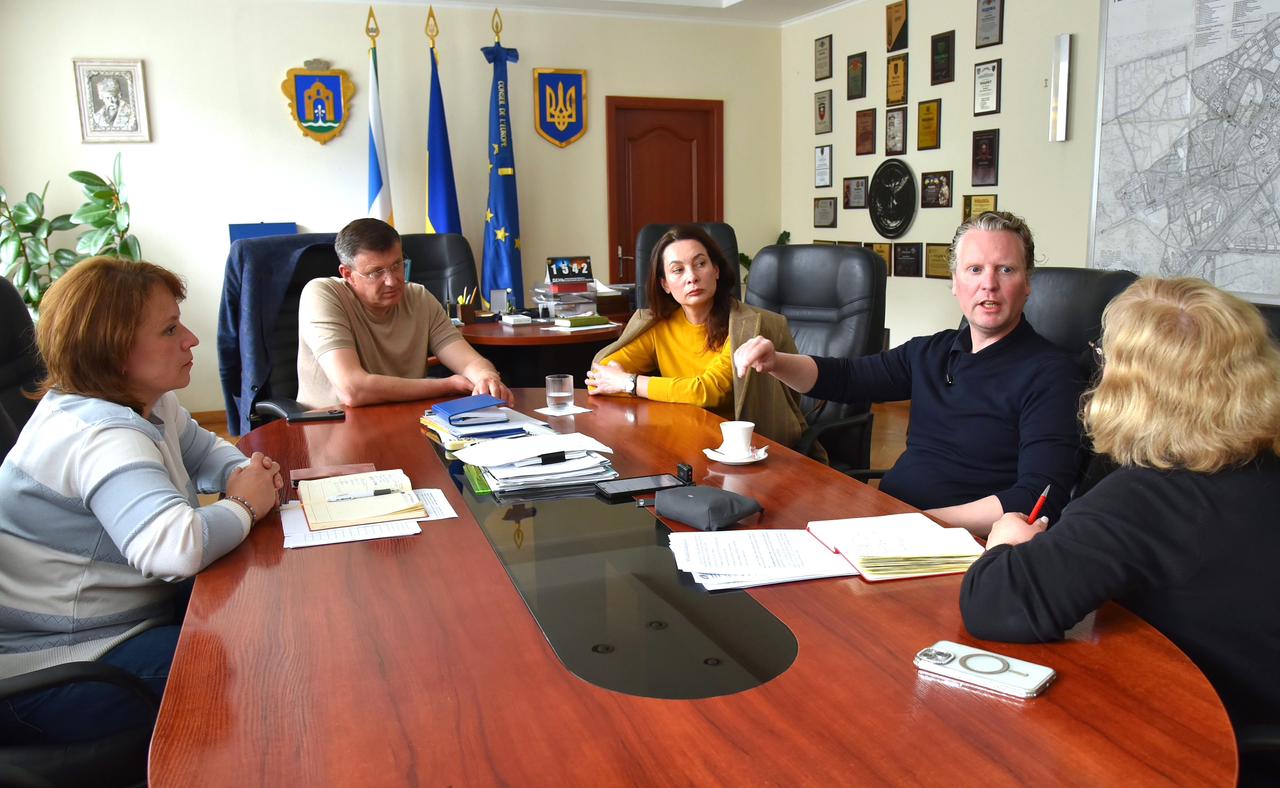
During the meeting with the local authorities, they discussed the urgent need to make critical infrastructure sustainable, as the community had faced severe challenges last winter under the conditions of energy deficits and Russian strikes. When the discussion turned to the fact that the legal concept of an “energy community” is still at the implementation stage in Ukrainian legislation, Siward urged them not to wait for perfect conditions.
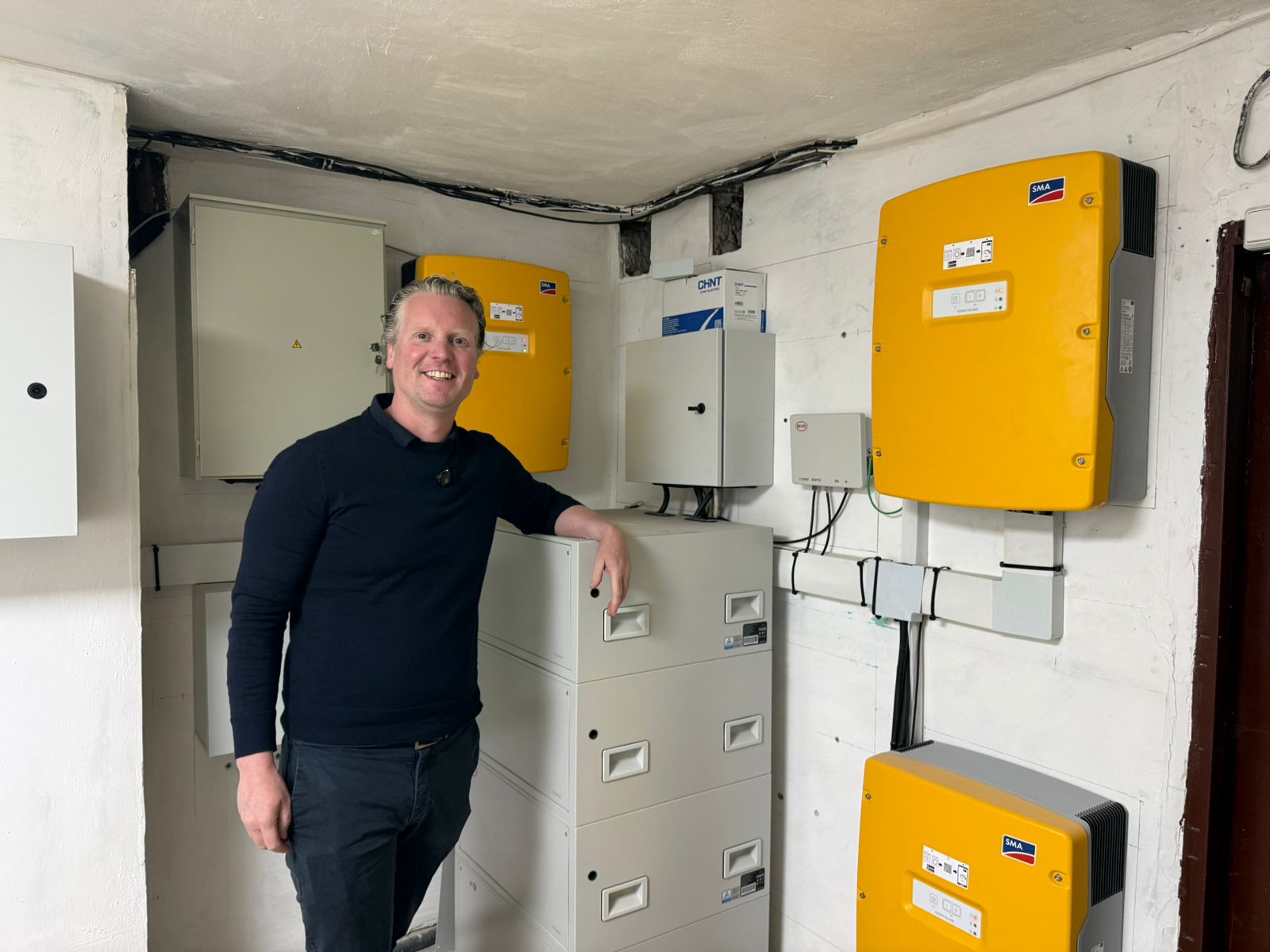
A key stop on the itinerary was a hospital in Brovary, where RePower Ukraine installed a solar power plant in 2024 with the support of German partners. Video footage of this hospital was broadcast on Netherlands national television. Explaining the technical side of the project, Siward debunked the myth that solar panels on the roof alone are enough for autonomy:
“What you are seeing on video now is actually the roof of the hospital. But the most important (and most expensive) part of this whole project is not on the roof, but in the basement, where computer systems, inverters, and large batteries are installed. They are what keep things running when the power goes out.”
Children’s drawings on the walls of a concrete bomb shelter deeply moved Siward, serving as a poignant reminder of the price Ukraine pays for freedom and the defense of shared European borders.
Decentralization as a tool for transparent governance in the energy transition
During the visit, Siward Zomer actively discussed the benefits of distributed generation with his Ukrainian colleagues, which historically minimizes the risks of inefficient or centralized management. He clearly emphasized that the international community must discard outdated stereotypes and view engagement with our country through the lens of an equal partnership:
“I fully understand that cooperation between Europe and Ukraine should not be treated as a relationship between a savior and a victim. I see tremendous strength, sacrifice, and expertise in all these people. We are equals.”
As part of the visit, the RePower Ukraine team hosted a webinar for representatives of Ukrainian municipalities, featuring Siward Zomer. The core message was that a collective approach offers communities a unique chance to avoid the mistakes made by Western Europe, where the market became overly fragmented due to individualism:
“There are three reasons to create an energy community: democracy, profit that stays within the community, and technical autonomy that creates resilience. We start small. RePower Ukraine will continue doing what it does, creating small systems now that can be built through donations. This will build trust among people in the community. If we start now in areas that are still relatively safe, by the time Ukraine wins the war, there will be a strong movement capable of helping with the reconstruction of the east.”
Siward Zomer’s Appeal to European Society
Upon returning from his trip, the European leader formulated an uncompromising appeal to his colleagues and European citizens:
“These people are defending the borders of Europe while we sleep. What we are doing together with Ukrainian communities is not just the right thing to do or charity. It is vital right now. I will tell my colleagues that we have no right to grow tired. Our everyday problems here in the Netherlands are actually trivial. This trip brings you back to reality.”
We sincerely thank our partners from Energie Samen and REScoop.eu for their unwavering solidarity, which brings Ukraine’s energy independence and collective freedom closer.
This fight for freedom will not stop at the moment of victory in the war. It will continue in the energy sector, and we are already working toward this today.